
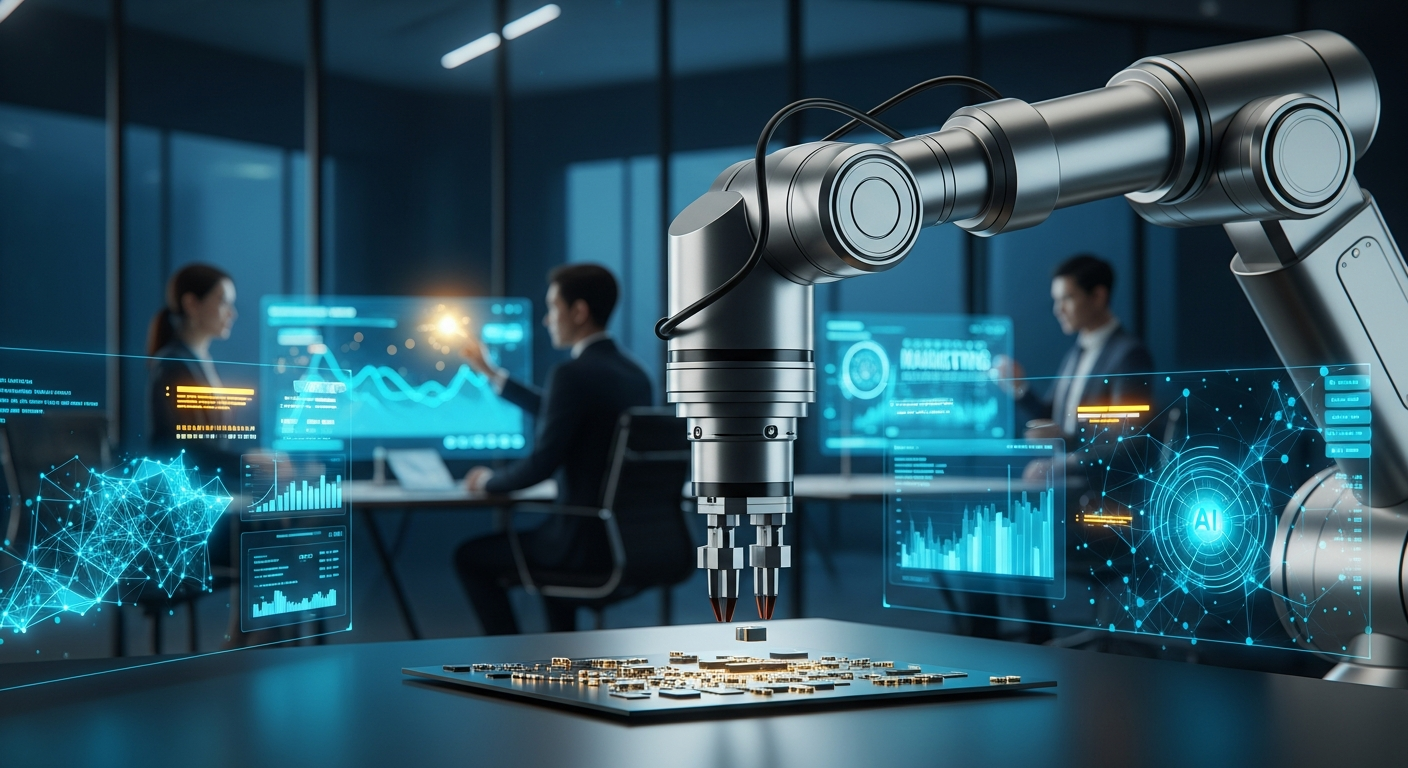
Beyond the Hype: Why Intelligent Automation is the ONLY Sustainable Growth Engine for Modern Businesses
In the dynamic landscape of modern commerce, where disruption is the norm and competitive advantage is fleeting, businesses are constantly seeking the next frontier of growth. We’ve seen trends come and go, but a fundamental shift is underway, one that transcends mere efficiency gains. We are talking about Intelligent Automation – a paradigm that leverages Artificial Intelligence (AI) and Machine Learning (ML) not just to automate tasks, but to foster genuinely sustainable, exponential growth.
For tech-savvy business owners, startup founders, digital marketers, and C-level executives in India and globally, the message is clear: the future belongs to those who embed intelligence at the core of their operations. This isn't just about cutting costs; it's about unlocking unprecedented potential, creating new value streams, and future-proofing your enterprise against an ever-evolving market. At Talkbeyond.blog, we believe intelligent automation is not merely an option, but the ONLY sustainable growth engine for businesses aiming to thrive, not just survive.
Key Takeaways:
- Intelligent Automation (IA) is more than RPA: It combines AI/ML with automation to learn, adapt, and make informed decisions, driving strategic growth beyond simple task execution.
- Sustainable Growth Driver: IA provides a scalable, resilient, and continuously improving framework for business expansion, unlike traditional linear growth models.
- Multi-faceted Impact: From hyper-personalizing customer experiences to optimizing complex supply chains and supercharging marketing ROI, IA transforms every facet of business.
- Indian Market Imperative: With India's rapid digital adoption and competitive landscape, embracing IA is crucial for local businesses to secure a global competitive edge and achieve sustainable business growth.
- Strategic Implementation: Successful adoption requires a clear strategy, focus on data, and a culture that embraces innovation and continuous learning.
The Shifting Paradigm: From Efficiency to Exponential Growth
Beyond Simple Automation: What is Intelligent Automation?
For years, "automation" conjured images of Robotic Process Automation (RPA) – software robots mimicking human actions to complete repetitive, rule-based tasks. While valuable, this was merely the first step. Intelligent Automation (IA) takes this a giant leap forward. It integrates advanced AI capabilities like machine learning, natural language processing (NLP), computer vision, and predictive analytics with automation tools. This fusion allows systems to:
- Understand Context: Process unstructured data, interpret intent, and make sense of complex information.
- Learn & Adapt: Continuously improve performance based on new data and outcomes, becoming smarter over time.
- Make Decisions: Execute tasks and initiate actions based on learned patterns and real-time insights, often without human intervention.
- Predict & Proact: Anticipate future trends, identify potential issues, and take preventative measures.
This capability to learn, adapt, and make intelligent decisions transforms automation from a mere cost-saving tool into a powerful engine for innovation and sustainable business growth with AI.
The Indian Business Landscape: A Tipping Point
India, with its vibrant startup ecosystem, burgeoning digital economy, and increasing tech literacy, stands at a pivotal moment. Businesses here are not just adopting technology; they are leapfrogging traditional growth cycles. The demand for efficiency, scalability, and personalized customer experiences is higher than ever. Companies that fail to embrace an AI-driven automation strategy risk being left behind in a market that rewards agility and foresight.
From e-commerce giants optimizing logistics to fintech startups revolutionizing banking and healthcare providers enhancing patient care, intelligent automation is rapidly becoming the backbone of successful digital transformation efforts across the subcontinent. It's about empowering businesses to serve millions, personalize at scale, and innovate at a pace previously unimaginable.
Pillars of Sustainable Growth: Where Intelligent Automation Excels
Revolutionizing Customer Experience (CX)
In an age where customer loyalty is built on exceptional experiences, IA offers unparalleled capabilities. Imagine a customer service chatbot powered by NLP that not only answers FAQs but understands complex queries, accesses customer history, and even proactively suggests solutions or offers. This isn't science fiction; it's happening now.
- Personalized Journeys: AI algorithms analyze vast amounts of customer data to predict preferences, recommend products, and tailor communications, creating truly hyper-personalized customer journeys.
- 24/7 Support & Engagement: AI-powered virtual assistants provide instant support across channels, reducing wait times and improving satisfaction.
- Proactive Issue Resolution: Predictive analytics can identify potential customer churn risks or service disruptions before they occur, allowing businesses to intervene proactively.
Example: Leading Indian e-commerce platforms use AI to power recommendation engines, personalize search results, and optimize delivery routes, significantly enhancing CX and driving repeat purchases.
Supercharging Marketing & Sales Pipelines
For digital marketers and sales leaders, intelligent automation is a game-changer. It allows for precision targeting, efficient lead nurturing, and optimized campaign performance, leading to higher Marketing Automation ROI India businesses are actively seeking.
- Automated Lead Qualification: AI scores leads based on engagement and demographic data, ensuring sales teams focus on the most promising prospects.
- Dynamic Content Personalization: AI generates and optimizes content variants (emails, ads, website copy) in real-time, tailoring them to individual user behavior and preferences.
- Predictive Sales Forecasting: ML models analyze historical data and market trends to provide accurate sales forecasts, enabling better resource allocation and strategy adjustments.
- Omnichannel Campaign Orchestration: Automate complex marketing workflows across email, social media, SMS, and other channels, ensuring consistent messaging and timely engagement.
Example: A growing SaaS company in Bengaluru leveraged AI-driven marketing automation to segment its audience with unprecedented accuracy, leading to a 30% increase in lead conversion rates and a significant reduction in customer acquisition costs.
Optimizing Operations & Supply Chains
Operational efficiency is the bedrock of profitability, and IA elevates it to new heights. From manufacturing to logistics, IA streamlines processes, minimizes waste, and enhances decision-making.
- Predictive Maintenance: ML algorithms analyze sensor data from machinery to predict failures before they happen, reducing downtime and maintenance costs.
- Intelligent Inventory Management: AI optimizes stock levels by predicting demand fluctuations, minimizing overstocking and stockouts.
- Automated Quality Control: Computer vision systems can rapidly inspect products for defects, ensuring consistent quality at scale.
- Supply Chain Optimization: AI analyzes global data to optimize routes, identify potential disruptions, and recommend alternative strategies, crucial for future-proofing business operations against geopolitical and environmental challenges.
Example: Major logistics companies are deploying AI to optimize delivery routes, manage warehouse operations, and sort packages, leading to faster delivery times and substantial cost savings. This is critical for scaling business with AI and ML in a country with diverse geographical challenges like India.
Empowering Human Capital & Innovation
Perhaps the most profound impact of intelligent automation is its ability to liberate human talent. By automating mundane, repetitive, and data-intensive tasks, IA allows employees to focus on strategic thinking, creativity, problem-solving, and human-centric roles.
- Enhanced Employee Productivity: AI assistants can handle administrative tasks, data entry, and report generation, freeing up employees for higher-value activities.
- Improved Decision Making: AI provides data-driven insights to employees, empowering them to make better, faster decisions.
- New Skill Development: As IA takes over routine tasks, employees are encouraged to upskill in areas like data analysis, AI oversight, and strategic planning, fostering a more innovative workforce.
This shift doesn't replace humans; it augments them, creating a more engaged, productive, and innovative workforce, essential for long-term digital transformation automation.
Real-World Impact: Case Studies & Future Projections
Consider the journey of a financial institution. Traditionally, loan applications involved mountains of paperwork and manual verification. With intelligent automation, AI-powered systems can now process applications, verify documents (using computer vision), assess creditworthiness (using ML algorithms), and even disburse funds, all with minimal human oversight. This not only dramatically reduces processing time from days to minutes but also minimizes human error and fraud, while offering a superior customer experience.
In the healthcare sector, AI is automating medical record management, assisting in diagnostic imaging analysis, and even personalizing treatment plans. For instance, AI-powered tools can analyze patient data to predict disease outbreaks or identify at-risk individuals, allowing for proactive public health interventions. This represents a monumental leap in efficiency and patient care.
Looking ahead, we envision a future where intelligent agents manage entire business units, making real-time decisions on pricing, inventory, marketing spend, and even product development based on continuous market feedback and predictive models. Human oversight will shift from execution to strategy, ethics, and innovation, directing these powerful AI systems towards new frontiers of value creation.
Navigating the Future: Implementing Intelligent Automation Strategically
Embracing intelligent automation is not a one-time project; it's a continuous journey. To truly leverage IA as a sustainable growth engine, businesses must adopt a strategic approach:
Starting Small, Scaling Smart
Don't attempt to automate everything at once. Identify high-impact, repetitive processes that are ripe for automation. Start with pilot projects, measure ROI, learn from challenges, and then scale incrementally. This agile approach minimizes risk and builds internal confidence.
Data as Your North Star
Intelligent automation thrives on data. Invest in robust data collection, cleaning, and analytics infrastructure. The quality and accessibility of your data will directly impact the intelligence and effectiveness of your AI systems. Treat data as your most valuable asset.
Cultivating an AI-First Mindset
Successful IA adoption requires a cultural shift. Encourage employees to embrace AI as a co-worker, not a threat. Invest in upskilling and reskilling programs to prepare your workforce for new roles alongside intelligent systems. Foster a culture of continuous learning and experimentation.
Conclusion
The choice for modern businesses is no longer whether to automate, but how intelligently to automate. Intelligent automation, powered by the relentless advancements in AI and ML, is the definitive path to not just efficiency, but to truly sustainable, exponential growth. It's the engine that will propel businesses in India and across the globe into a future defined by innovation, resilience, and unparalleled customer value.
The time for hesitation is over. The future of business is intelligent, automated, and here to stay. Equip your enterprise with the strategies and insights needed to lead this transformation.
Frequently Asked Questions (FAQ)
1. What is the key difference between traditional automation (RPA) and Intelligent Automation (IA)?
Traditional automation, often called RPA (Robotic Process Automation), focuses on automating repetitive, rule-based tasks by mimicking human actions on a computer interface. It follows pre-defined scripts and cannot adapt to changes or unstructured data. Intelligent Automation (IA), on the other hand, integrates advanced AI capabilities like machine learning, natural language processing, and computer vision. This allows IA systems to understand context, learn from data, make informed decisions, adapt to new situations, and handle complex, unstructured information, driving more strategic and cognitive automation.
2. How can small and medium-sized enterprises (SMEs) in India leverage intelligent automation without a massive budget?
SMEs can start by identifying specific, high-impact pain points that can be automated, rather than attempting a full-scale overhaul. Focus on cloud-based AI-as-a-Service (AIaaS) platforms or low-code/no-code IA tools, which offer subscription models and require less upfront investment. Examples include AI-powered chatbots for customer service, automated email marketing platforms, or intelligent document processing for accounting. Prioritize processes with clear ROI, such as lead qualification, inventory management, or customer support, to quickly demonstrate value and justify further investment.
3. What are the biggest challenges businesses face when implementing intelligent automation?
Key challenges include ensuring data quality and accessibility, as IA systems rely heavily on robust data. Resistance to change from employees, who may fear job displacement, requires strong change management and upskilling initiatives. Integrating new IA systems with legacy IT infrastructure can also be complex. Additionally, defining clear objectives, measuring ROI effectively, and finding skilled talent to manage and optimize these systems are crucial hurdles that businesses must strategically address.
4. How does intelligent automation contribute to long-term business sustainability?
Intelligent automation contributes to long-term sustainability by fostering continuous improvement and adaptability. It enables businesses to scale operations without proportionally increasing costs, optimize resource utilization (e.g., energy, materials), enhance decision-making through data-driven insights, and innovate faster. By automating mundane tasks, it frees human capital for strategic work, leading to a more engaged and resilient workforce. This combination of efficiency, agility, and innovation allows businesses to maintain competitiveness, respond effectively to market shifts, and achieve consistent growth over time.



COMMENTS
Loading comments...
Leave a Comment