
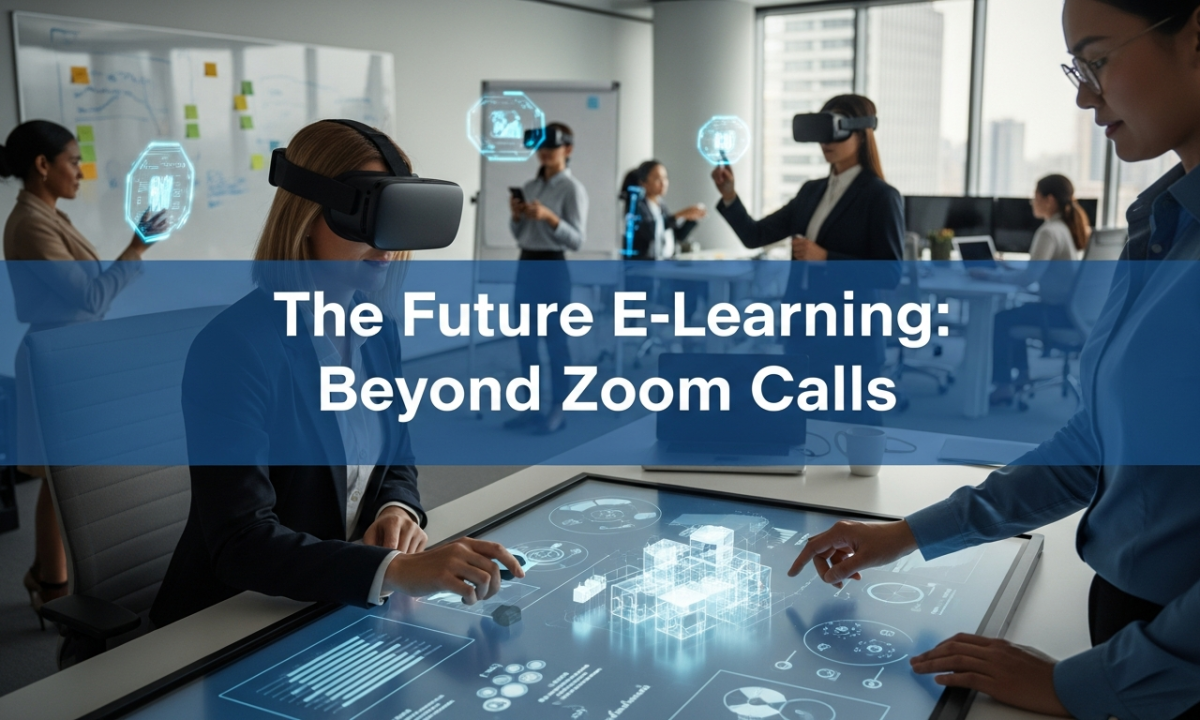
Future of E-Learning: Beyond Zoom & Into Innovation
The Future of E-Learning: Beyond Zoom & Into Innovation
Let's be honest: Zoom fatigue is real. For too long, "e-learning" has simply meant replicating classrooms on a video call, or clicking through static slides. While effective, this model often falls short on engagement, personalization, and true skill development. But here’s the exciting part: we are at the precipice of a radical transformation. The Future of E-Learning: Beyond Zoom Calls is not just a phrase; it's a rapidly approaching reality where learning is immersive, adaptive, and deeply personal. I've spent years in this space; what’s coming next will redefine how we acquire knowledge and skills.
The Real Deal: Why Current E-Learning Often Falls Short
The biggest challenge with conventional online learning isn't just the technology, but often its application. We've leaned heavily on passive consumption: lectures, pre-recorded videos, and text-heavy modules. This approach struggles to foster genuine interaction, which is crucial for deeper understanding. A one-size-fits-all curriculum often fails to cater to diverse learning styles or adapt to individual progress. We often see high dropout rates and a lingering sense of disconnection. Pro-Tip: Engagement isn't just about seeing or hearing; it's about experiencing and doing.
What's Next? Technologies Shaping E-Learning's Horizon
The next wave of e-learning leverages groundbreaking technologies to create richer, more effective learning environments. We're moving away from merely broadcasting information to constructing truly interactive worlds.
Immersive Experiences: VR, AR, and the Metaverse Classroom
Imagine dissecting a virtual frog without harming an animal, walking through ancient Rome from your living room, or practicing complex surgical procedures in a simulated operating theater. This is the promise of virtual reality (VR) and augmented reality (AR) in education. VR transports learners into fully simulated environments, offering hands-on experience without real-world risk. AR overlays digital information onto the physical world, enriching real-time learning with interactive data. These technologies are crucial for experiential learning, boosting retention and understanding far beyond what a textbook or video can offer. Actually, the impact on fields like medicine, engineering, and vocational training is already profound.
Pro-Tip: Don't feel you need to jump straight into expensive VR. Start small with AR apps that bring textbooks to life. The goal is making learning interactive and spatial.
AI-Powered Personalization and Adaptive Learning
Artificial intelligence is arguably the most transformative force in the future of e-learning. AI tutors can provide immediate feedback, answer questions, and guide students through complex topics at their own pace. Adaptive learning platforms, powered by AI, analyze a learner's performance, identify knowledge gaps, and dynamically adjust the curriculum to provide targeted content. This means no more bored students waiting for others to catch up, and no more frustrated learners falling behind. Basically, AI doesn't replace the human educator; it empowers them to focus on mentoring and deeper interaction by automating the individualized learning path. It's about making learning truly student-centric.
Gamification and Microlearning for True Engagement
We know that making learning fun dramatically increases motivation and retention. Gamification integrates game-like elements—points, badges, leaderboards, challenges—into non-game contexts. This approach transforms mundane tasks into engaging experiences. What's more, when combined with microlearning, which delivers content in bite-sized, digestible modules, the impact is even greater. Microlearning fits perfectly into our busy lives and shrinking attention spans, allowing learners to acquire specific skills quickly and efficiently. Think short, interactive quizzes, animated explainers, or quick challenges that can be completed during a coffee break. It's about making learning accessible and rewarding.
Evolving Learning Environments: Hybrid, Holistic, and Skill-Focused
Beyond individual technologies, the very structure of how and why we learn is shifting.
Blended Realities: The Hybrid Learning Model
The pandemic forced many institutions into emergency remote learning. The future, however, points towards a more intentional and optimized hybrid model. Blended learning combines the flexibility and reach of online education with the invaluable social interaction, hands-on activities, and community building that in-person learning provides. It's not just about splitting time; it's about strategically leveraging the strengths of both modalities. This means interactive online simulations before a physical lab session, or collaborative virtual projects that culminate in a face-to-face workshop. The real deal is finding the optimal balance for specific learning objectives.
The Rise of Skill-Based Learning and Digital Credentials
The job market is rapidly changing, and traditional degrees alone are often insufficient to meet industry demands. The future of e-learning is heavily focused on skill-based learning. Learners will acquire specific, verifiable skills, often through shorter courses or micro-credentials, that directly address workforce needs. Digital badges and blockchain-verified certificates will become commonplace, providing transparent and portable proof of competencies. We’re moving towards a world where what you can *do* matters more than just where you studied. This shift empowers individuals to upskill and reskill continuously, staying relevant in dynamic professional landscapes.
My Perspective: Navigating the E-Learning Revolution
As someone who's seen the ebb and flow of educational technology trends, I believe the key to success in this new era isn't just adopting the latest tech. It's about designing with the human learner at the center. We need to ask: Does this technology improve comprehension? Does it foster connection? Does it make learning more equitable? If we don't prioritize pedagogy over novelty, we risk creating incredibly advanced, yet equally ineffective, learning tools. My experience tells me that the most impactful innovations will be those that easily integrate into the learner's life, offering personalized paths while maintaining a sense of community. Pro-Tip: Always pilot new technologies with a small group and gather honest feedback before scaling. Iterate, iterate, iterate.
Frequently Asked Questions About The Future of E-Learning
- What is immersive learning? Immersive learning uses virtual or augmented reality to place learners in simulated environments for realistic, hands-on experiences.
- How will AI change teaching? AI will personalize learning paths, provide instant feedback, and automate administrative tasks, allowing teachers to focus on mentorship and complex problem-solving.
- Is virtual reality expensive for education? While initial VR hardware can be an investment, prices are decreasing, and the long-term benefits often outweigh the costs, especially for complex training.
- What is microlearning? Microlearning delivers educational content in short, focused modules, typically 5-10 minutes, designed for quick consumption and targeted skill acquisition.
Embracing Tomorrow's Learning Landscape
The era of simply logging into a video call for "e-learning" is rapidly fading. The future promises a vibrant, interactive, and highly personalized learning landscape, driven by AI, immersive technologies, and a renewed focus on practical skills. Educators, institutions, and learners alike must embrace this evolution, not as a challenge, but as an incredible opportunity to redefine education for the 21st century and beyond. Ready to rethink how you learn and teach? The revolution has already begun.



COMMENTS
Loading comments...
Leave a Comment